Home > Library > Articles & Essays > Intimate Partner Sexual Violence
Falling into a Crevasse within the Crack:
My Experience of IPSV
© Carleen Hite, 2009
Imagine walking across an ice field and slipping into a
crack. As you slip deeper into the crack you find yourself falling into a
deep crevasse. There is nothing to stop you falling and no help to be
found. That is how I have felt.
Intimate Partner Sexual Violence (IPSV) is the subject of an ever
growing body of research. From the seminal studies by Russell, Bergen
and Finkelhor and Yllo in the late 1980s and the 1990s there has grown a
wide range of articles on IPSV; the victims, the perpetrators and the
effects. Most of these articles deal with IPSV within a battering
relationship. Where does that leave those of us who faced no physical
violence outside of the bedroom? This article will discuss my experience
of being a survivor of IPSV where there was no physical battery.
“Real” Rape:
It has been a long battle to have IPSV, also known as partner, marital
and wife rape, accepted as “real” rape. While it is now a criminal
offence in many countries it is still a crime that receives little
public attention or validation through the legal system. In many states
in America, wife rape laws still have exemption clauses, often giving a
man who rapes his intimate partner a get out of jail free card. Other
barriers to the prosecution of IPSV include shorter reporting time
limits and more stringent evidentiary requirements. It is no wonder that
IPSV is the least reported and prosecuted type of rape.
Academics and activists have worked hard to change the public perception
of what constitutes “real” rape and who “real” rape victims and
perpetrators are. Studies have shown that a rapist is likely to be known
to their victim, with only 26% of reported rapes in the USA committed
by strangers (USA Dept of Justice cited in Wikipedia). Of the remaining
74%, 38% were committed by a date or acquaintance, 26% by a current or
past intimate partner and 7% by another family member. These figures
make it clear that the popular
media image of a wild-eyed stranger as a typical rapist is wrong in the
majority of cases. Yet it is this enduring stereotype that many people
think of when they think about who a rapist is. It also neglects the
very small percentage of female rapists. People don’t want to think that
a rapist could be the person they are married to, who their child is
dating, a person they work with or a favoured relative.
Wife Rape:
Diana Russell’s 1985 study found that 14% of women who have ever been
married had been raped by their husbands (Weingourt, 1985). This figure
does not include those women who submitted to sex out of “wifely duty”
or helplessness, people in a de facto or dating relationship or
teenagers. Nor does it include those who, for whatever reason, cannot
acknowledge or identify inappropriate sexual behaviour by a husband
(Russell, cited in Weingourt, 1985) so it is reasonable to expect that
the figure of 14% does not accurately reflect the true scope of the
problem.
Other studies have shown that 33 – 59% of women in domestic violence
shelters reported both sexual and nonsexual violence in their
relationships (Langhinrichsen-Rohling & Monson, 1998). This shows
that sexual victimisation co-occurs frequently with physical battery and
other forms of intimate partner violence. With such a high figure it is
surprising that few services are equipped to deal with the specific
issues of IPSV. Many domestic violence workers consider it to be just
another part of domestic violence or they call it a sexual abuse/rape
issue. Sexual assault workers tend to do the opposite, naming IPSV as a domestic violence issue. All too often this either/or attitude results
in a failure to address the specific issues that result from sexual
assault within an intimate relationship.
The Crack:
With so few specific services available to IPSV survivors it is not
surprising that many feel as if they have fallen through a gap in the
system. This is something I feel acutely. I am still trying to find a
“place” within the system where I feel I belong. The domestic violence
groups I have attended have mentioned sexual abuse only in passing,
without acknowledging the particular issues related to IPSV. The local
sexual assault service I was referred to refused to accept me as a
client as I was still in the relationship and being subjected to abuse. I
was fortunate to be able to access sexual assault counselling from
another service, by telephone and then be referred to a psychologist who
is experienced in the area of trauma related issues. But I still find
myself looking for that “place” to belong as I negotiate my healing
journey, for a label that covers what I went through.
The Crevasse:
The enduring stereotype of domestic violence is that it always involves
physical battery. Without that some people have difficulty identifying
what domestic violence is, including many victims. “Real” domestic
violence may also include other types of abuse, such as sexual,
financial and emotional abuse, but without battery many people cannot
name it as domestic violence. So what happens to those of us who were
primarily sexually abused or had a complete absence of physical battery?
Personally, I still struggle to call what happened to me as domestic violence because he never hit me.
Some studies have shown that 1 – 10% of women in non-battering
relationships report incidents of IPSV (Langhinrichsen-Rohling &
Monson, 1998). This shows that I am not alone in my experiences, and
probably not in my hesitation to name it as domestic violence. From
personal experience it still feels like I am. Without the bruises that
are sometimes evidence of battery it is not easy to identify as a victim
of domestic violence. Even now, four months after ending my marriage I
find myself minimising what happened. “He never hit me” is a phrase I
frequently use when talking about the abuse, as if, somehow, that makes
it better. Just as frequently I used to wish that he would hit me.
Perhaps then I would feel more accepting of the domestic violence
survivor label. That is not to say that the sexual abuse occurred in a
vacuum. There was mental and emotional abuse as well as social
isolation. But he never hit me.
Needing a Label:
Being a rather logical, obsessive type of person I like to have things
identified properly, a trait I share with many a bureaucracy (Try
getting help for a special needs child without a label!). Yet for most
of my marriage I had no label, no name, for what was happening. During
that time I honestly thought that the problem was with me and that was
why I was unhappy and full of self-loathing. It wasn’t until just over a
year before I ended my marriage that I was able to identify the
emotional and mental abuse by my husband. Even that only happened
because I was finally able to disclose some of what was happening in my
marriage to friends. But I couldn’t bring myself to disclose the
concerns I had about sexual things that happened. I tried any number of times to disclose to a friend. I had
even planned how I would start the conversation.... “Sometimes he does
things in bed that I don’t like or that hurt.” But I just couldn’t get
the words out. It never occurred to me that those things he did could be
considered sexual abuse or rape.
The Book That Turned My World Upside Down:
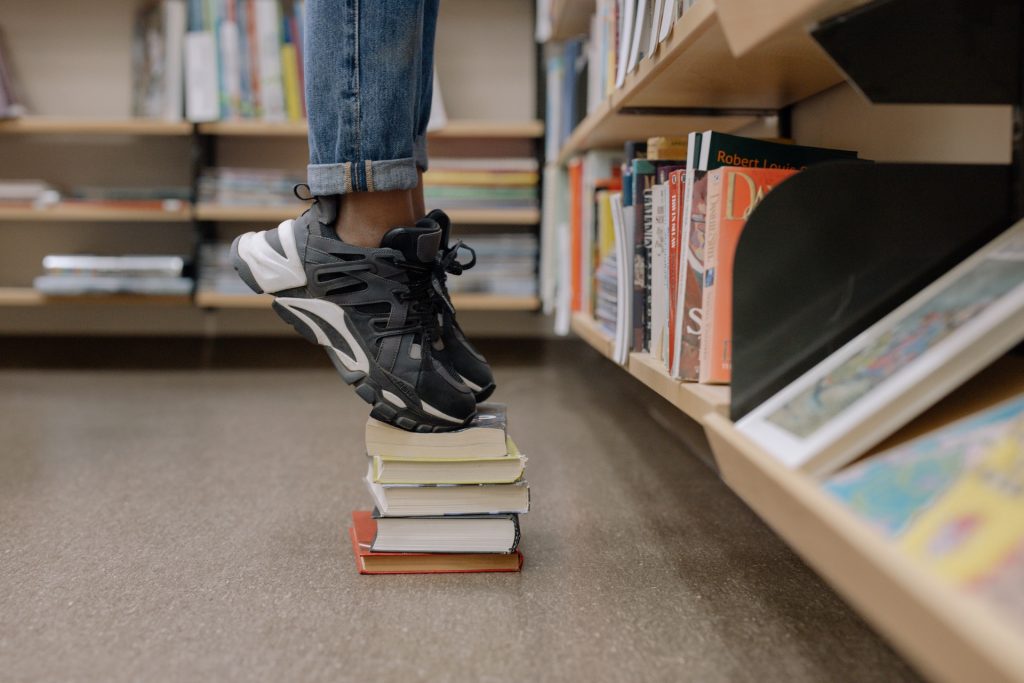
Have you ever been in a bookshop or library and just wandered around,
not really looking for anything in particular, only to have a book you
need to read practically jump out and bite you on the nose? That is what
happened to me. If I hadn’t found this book I doubt that I would be
alive today. Even if I was I almost certainly would not be writing this.
The book? Real Rape,
Real Pain: Help for Women Sexually Assaulted By Male Partners by Patricia Easteal and Louise McOrmond-Plummer (Easteal &
McOrmond-Plummer, 2006). I could rave for hours about what I got from
this book but shall restrain myself.
The four most important things I did get were a name for what was
happening to me, the knowledge that I wasn’t alone, a feeling of hope
that it was not only possible to survive this but to heal from it and
the information I needed to find support from others. Of course I gained
a lot more than just those four things but they are the big ones. This
book became my bible and I would borrow it from the library and sneak it
into my study on a regular basis. Sometimes I would just hold the book
to draw strength from the voices inside, the voices who had been brave
and strong enough to break the silence.
Commonality, Community and Support:
From Real Rape, Real Pain I found my way to the website Aphrodite Wounded, developed and
maintained by Louise McOrmond-Plummer. This website contains a wealth of
information about IPSV. It also has a link to Pandora’s Project; a website for survivors
of sexual assault and rape, and the associated message boards at Pandora’s Aquarium(aka Pandy’s),
developed, maintained and moderated by Shannon and her team of wonderful
administrators and moderators.
The community of members at Pandy’s have become a great source of
support and friendship. It is a place where people can share the worst
details of their assaults and how it affects their lives, as well as
discuss a wide range of other topics. There I have been able to tell the
most disgusting details of my abuse, my sense of shame and
self-loathing, as well as share my triumphs and victories, receiving
support that I will always be grateful for. As well as finding support
and commonality I have also been able to give it back to others, in the
hope that it helps them just a little.
It was in many ways the support I received on Pandy’s that encourage me
to break my silence in real life. Slowly I started to reach out to my
friends, building a network of support. I approached the local domestic
violence service. The staff there have provided a lot of support and
through them I was able to access the psychologist I see, who has been
an amazing source of information and support. All of this occurred while
I was still in the marriage, still being regularly abused by my
husband. It was so very hard to maintain a semblance of normality at
home while I was sharing the darkest days of my life with friends and
professionals.
The Abuse, The Kids, The End:
The abuse I suffered at the hands of my husband was disgusting,
demeaning and humiliating. I believe the trauma I went through will
affect me in some way for the rest of my life. There are things that
happened that I will probably never speak about. While, mostly, I am
able to place the blame for the abuse where it belongs, with my husband,
there are still many days when I question if there was anything I could
have done to make it stop and keep the marriage alive, but of course
there was nothing. Other days I cried to have my ignorance back. Being
miserable was hard but knowing why I was miserable and feeling that
there was nothing I could do to change things was harder.
My biggest fear in ending my marriage revolved around our children.
While I was not completely blind to the effect my husband’s abuse of me
was having on them I truly believed that they were better off with an
emotionally absent but physically present father than a part-time dad.
But I was watching my daughter begin to be treated like I was, without
the sexual abuse. She did not deserve to grow up believing that as a
female her role was to be a slave to the males in her life. And I
watched my son withdraw into his bedroom and the obsessions that are a
manifestation of his autism. The truth was that my kids were hurting.
When the end came it was a bit on an anti-climax. He left with no
protest, threats or declarations of undying love. The improvement in the
kids was immediate. It was as if a weight had been lifted off them. My
son was suddenly more stable and settled in school, which was a huge
improvement. The best thing is that through visitation the kids and
their father have to spend time together and are beginning to build a
real relationship.
For me the end of the marriage has meant the beginning of a whole new
set of problems, with little relief from the old ones. Fear, anxiety and
depression are still regular visitors. The only thing that has
completely gone is the sexual abuse, although the mental and emotional
abuse have decreased. I lean heavily on my support system, something I
feel guilty about a lot. And every day I get out of bed. For my kids I
function, at times only just. I have to believe that it will get better
and remember that healing will take time.
The Future:
Now it is time for me to start giving back. I remember how alone I felt
when I couldn’t name what was happening. If others hadn’t broken the
silence I would still feel like that. I hope that I will be able to help
others break the silence and begin to reach out for support. I also
want to help increase public awareness about IPSV, especially about the
fact that it can occur without battery. It has been done with rape,
domestic violence and child abuse, now it is IPSV’s turn.
I want to help fill the gap and stop other women feeling like they have
fallen into a bottomless crevasse.
References:
Easteal, P., & McOrmond-Plummer, L. (2006).
Real Rape Real Pain: Help for women sexually assaulted by male partners.
Melbourne: Hybrid Publishers.
Langhinrichsen-Rohling, J., & Monson, C. M. (1998). Marital Rape: Is
the Crime Taken Seriously Without Co-occurring Physical Abuse? Journal
of Family Violence , 433-443.
McOrmond-Plummer, L. (n.d.). Aphrodite Wounded. Retrieved from Aphrodite
Wounded: www.aphroditewounded.org
Shannon. (n.d.). Pandora's Project. Retrieved from Pandora's Project:
www.pandorasproject.org
Weingourt, R. (1985). Wife Rape: Barriers to Identification and
Treatment. American Journal of Psychotherapy , 187-192.
[Printable PDF version of this article]
This article is copyrighted and unauthorized reproduction is prohibited.
If you wish to use this article online or in print, please contact us to request permission.